Cooling Performance
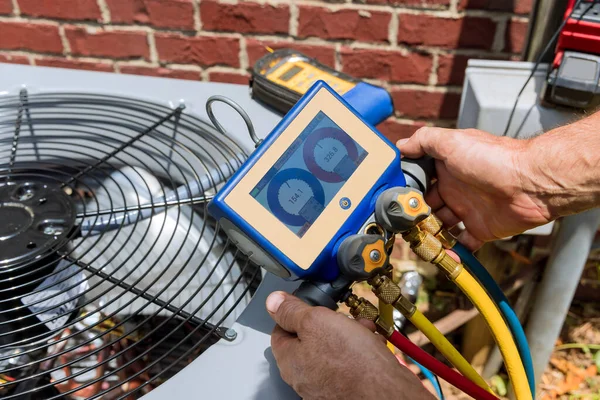
AC service work focuses on dependable diagnostics, accurate repairs, and high-efficiency replacement planning that improves room-to-room comfort in peak summer conditions.
Wellman Heating & Air LLC is a family-owned and operated business built on a foundation of four decades of industry experience.
"Founded by John Wellman, we've spent the last four years serving our local community with a focus on honesty, quality, and residential expertise."

Owner & Lead Technician
"We're not just fixing systems; we're building relationships. Our goal is to provide the same level of care and quality we'd want for our own families."
We keep our team small to ensure quality control. Every job is handled by John and his expert partner, ensuring 40 years of knowledge is applied to every installation.
We don't do big commercial jobs. We focus 100% on residential homes, which means we understand the unique needs of families and homeowners in Mesa County.
No sales gimmicks or hidden fees. We provide clear, upfront pricing and honest recommendations, whether you need a simple repair or a full system changeout.
Homeowners in Grand Junction and surrounding Mesa County communities often compare several HVAC contractors before making a decision. Most families are not only looking for a company that can complete a repair or installation, but a partner that can explain tradeoffs clearly and recommend work that actually matches the condition of the home. This page is designed to provide that context by outlining how Wellman Heating & Air approaches diagnostics, project planning, and long-term service support for residential properties across the Grand Valley.
The company has built a local reputation around practical recommendations, accurate system evaluation, and clean project execution. That means identifying root causes before recommending large scope changes, discussing repair-versus-replacement options in plain language, and helping homeowners understand what outcomes to expect from each path. For families managing both comfort and budget priorities, this communication-first process reduces decision pressure and keeps projects aligned with real household goals.
Rather than treating every call as a generic ticket, the team evaluates home-specific factors such as layout, airflow behavior, equipment age, usage patterns, and seasonal performance history. This level of context is essential in western Colorado where homes range from legacy properties with older duct configurations to newer builds with advanced control systems. A one-size-fits-all recommendation can underperform quickly in that environment, while a tailored plan creates stronger reliability and ownership value.
AC service work focuses on dependable diagnostics, accurate repairs, and high-efficiency replacement planning that improves room-to-room comfort in peak summer conditions.
Furnace, heater, and boiler projects are built around combustion safety, airflow consistency, and dependable winter uptime for western Colorado weather cycles.
Tank and tankless recommendations emphasize realistic household demand, long-term efficiency, and maintenance planning that prevents no-hot-water emergencies.
Comprehensive residential expertise matters because most comfort complaints are not isolated to a single component. A cooling issue may be linked to airflow imbalance, a heating complaint may involve control calibration, and a water-heating concern may relate to demand mismatch or mineral buildup over time. By maintaining broad system knowledge across disciplines, the team can provide recommendations that solve the complete problem instead of applying temporary fixes.
This integrated approach also improves continuity for homeowners. Families do not need to coordinate multiple vendors for related comfort systems or repeat the same property history to new crews at each visit. A consistent service partner creates better documentation, faster diagnostics, and clearer long-term planning when upgrades are needed.
Trustworthy HVAC guidance begins with measurable diagnostics. Before major decisions are made, homeowners deserve a clear explanation of what failed, what caused it, and what will happen if the issue is left uncorrected. This level of transparency helps families compare options without confusion and prevents over-scoped recommendations that do not match the actual condition of the system.
Reliable recommendations also separate immediate needs from strategic upgrades. In many cases, a repair is fully appropriate and provides strong value. In other cases, recurring failures and declining efficiency indicate that replacement planning is more economical over time. The right answer depends on trendline evidence, not sales pressure. Wellman Heating & Air emphasizes this distinction so customers can invest with confidence.
Installation quality is another decisive factor. Even premium equipment can underperform if sizing, airflow, controls, and commissioning are rushed or incomplete. For that reason, project outcomes are treated as a system-level responsibility rather than a parts-only transaction. The objective is stable comfort and predictable operation after the work is complete, not simply completing the install checklist as quickly as possible.
Finally, service should include practical aftercare guidance. Homeowners are better protected when they understand recommended maintenance intervals, early warning symptoms, and the specific checks that keep equipment operating efficiently through each season. This post-service clarity reduces emergency disruptions and supports better long-term ownership cost control.
Service is centered in Grand Junction with coverage across Mesa County and nearby communities. Local accountability means recommendations are built around real climate conditions and housing patterns in this region, not generic national scripts.
Households in areas such as Fruita, Clifton, Palisade, Redlands, Whitewater, and Parachute can expect the same communication standards and technical discipline applied to every call.
A residential-only model keeps service aligned with homeowner priorities: comfort consistency, family safety, utility efficiency, and predictable maintenance burden.
This specialization supports faster pattern recognition in home systems and stronger continuity when customers call for future inspections, repairs, or planned upgrades.
This profile is built as a practical decision aid for families comparing contractors and planning home comfort investments. Instead of only listing credentials, it explains how recommendations are formed, how project scope is prioritized, and how communication standards support fewer surprises across the full service lifecycle.
Strong projects begin with a complete diagnostic process that confirms root cause before any major recommendation is made. This stage protects homeowners from overscoped work and helps align next steps to real system condition.
Installation and repair quality is measured by performance outcomes after service, not just task completion. Setup validation, controls checks, and operating verification are critical to long-term comfort stability.
Post-service clarity keeps homeowners in control by outlining maintenance priorities, early warning signs, and realistic upgrade timing so future decisions remain proactive.
Focus on restoration plus diagnostic clarity so immediate relief does not hide deeper contributors that can trigger recurring failures.
Use phased planning to sequence safety, reliability, and efficiency upgrades over realistic budget windows while preserving year-round comfort.
These foldable FAQs expand on service philosophy, recommendation standards, and planning expectations for homeowners evaluating Wellman Heating & Air.
A residential-only model keeps diagnostics, recommendations, and installation standards aligned with homeowner priorities such as comfort consistency, safety, efficiency, and long-term service continuity.
Homeowners should receive clear scope options with required work separated from optional upgrades, plus plain-language explanations of expected outcomes and maintenance implications.
Accountability is maintained through documented findings, practical maintenance guidance, and consistent communication so future service builds on known equipment history instead of restarting from scratch.
Correct sequencing prevents recurring issues by handling foundational airflow, control, and safety factors before or alongside larger equipment investments.
Compare providers on diagnostic depth, communication quality, commissioning process, and aftercare guidance rather than price alone. Process quality usually predicts long-term results.
Planning during shoulder seasons usually provides better scheduling flexibility and more time for side-by-side option review before severe weather demand creates urgency.
Long-term HVAC value is created when service decisions are based on system behavior over time, not only the immediate symptom. Families who receive clear diagnostics and realistic planning guidance are more likely to avoid repeated emergency calls, control utility spending, and maintain dependable comfort through both heating and cooling extremes.
Experience also improves project sequencing. In many homes, the right order of work matters just as much as the work itself. Correcting airflow constraints, control compatibility, and safety settings in the right sequence can prevent recurring problems that would otherwise return after a simple component replacement. This sequencing discipline is one reason consistent crews and local expertise deliver better outcomes.
Wellman Heating & Air built its local identity around that practical standard: diagnose carefully, explain clearly, install correctly, and support the homeowner after the job. For residents comparing HVAC companies in Grand Junction, this approach provides a straightforward path to better comfort and stronger confidence in every major home-system decision.
Home comfort planning is most effective when families define success before selecting equipment or approving scope. Some households care most about reducing monthly utility volatility, others prioritize eliminating temperature swings between bedrooms and living spaces, and others want a system that can handle growth in occupancy or renovations. A quality contractor should translate those goals into technical planning checkpoints, including airflow performance, control strategy, capacity matching, and realistic maintenance expectations.
Another important planning factor is timing. Proactive upgrades and tune-ups during shoulder seasons usually provide better scheduling flexibility and more complete commissioning. Emergency decisions during peak weather can still be handled, but time pressure often narrows options and increases stress for homeowners. By planning earlier, families gain more control over cost comparisons, product selection, and implementation quality.
Preventive maintenance is also part of long-term planning, not a separate afterthought. The most valuable maintenance programs focus on measurable reliability outcomes: clean airflow pathways, calibrated controls, safety checks, and early wear detection on critical components. This approach lowers the chance of sudden failures and helps extend equipment service life without unnecessary add-ons.
For households balancing multiple priorities, a phased strategy often works best. Immediate corrections can address urgent comfort or safety concerns, while planned improvements target efficiency and reliability over the next few seasons. A transparent phased approach allows families to invest at a sustainable pace while still moving toward better total system performance.
What diagnostic steps are used to confirm root cause before recommending repair or replacement?
How is equipment sizing validated for this home’s layout, insulation condition, and airflow constraints?
Which parts of the recommendation are essential now, and which are optional future upgrades?
How will startup testing and commissioning be documented after installation work is complete?
What maintenance checkpoints are recommended for this system and local climate conditions?
How should homeowners monitor system behavior between service visits to catch early warning signs?
Asking these questions improves project clarity and helps homeowners compare providers on process quality, not only price. Better questions typically lead to better outcomes because they reveal how thoroughly a contractor evaluates systems, communicates options, and supports long-term reliability after the initial job.
Communication quality is one of the clearest indicators of service quality. Homeowners should expect clear arrival coordination, respectful onsite communication, and straightforward explanations of findings before work begins. Technical language should be translated into practical outcomes so families understand what each option means for comfort, cost, and reliability over time.
During active projects, updates should remain transparent and specific. If scope changes are needed after deeper inspection, those changes should be explained with evidence and prioritized clearly. This prevents confusion, protects homeowner trust, and keeps projects aligned with agreed goals. A strong communication process also reduces delays by setting expectations for scheduling, access needs, and post-install verification steps.
After service is completed, a short operating review helps homeowners maintain performance. That review should include what was fixed, what to watch next, and when to schedule future maintenance. Consistent follow-through turns single service visits into long-term comfort strategy, which is especially valuable in climates where systems must perform through both high summer heat and cold winter nights.
For households comparing local HVAC providers, communication consistency can be the deciding factor between short-term relief and long-term confidence. A contractor that explains decisions clearly, documents next steps, and remains accountable after the project is complete gives homeowners a stronger foundation for every future comfort decision.
We're proud to be Grand Junction's local HVAC experts. Let us show you why our customers keep coming back for all their heating and cooling needs.