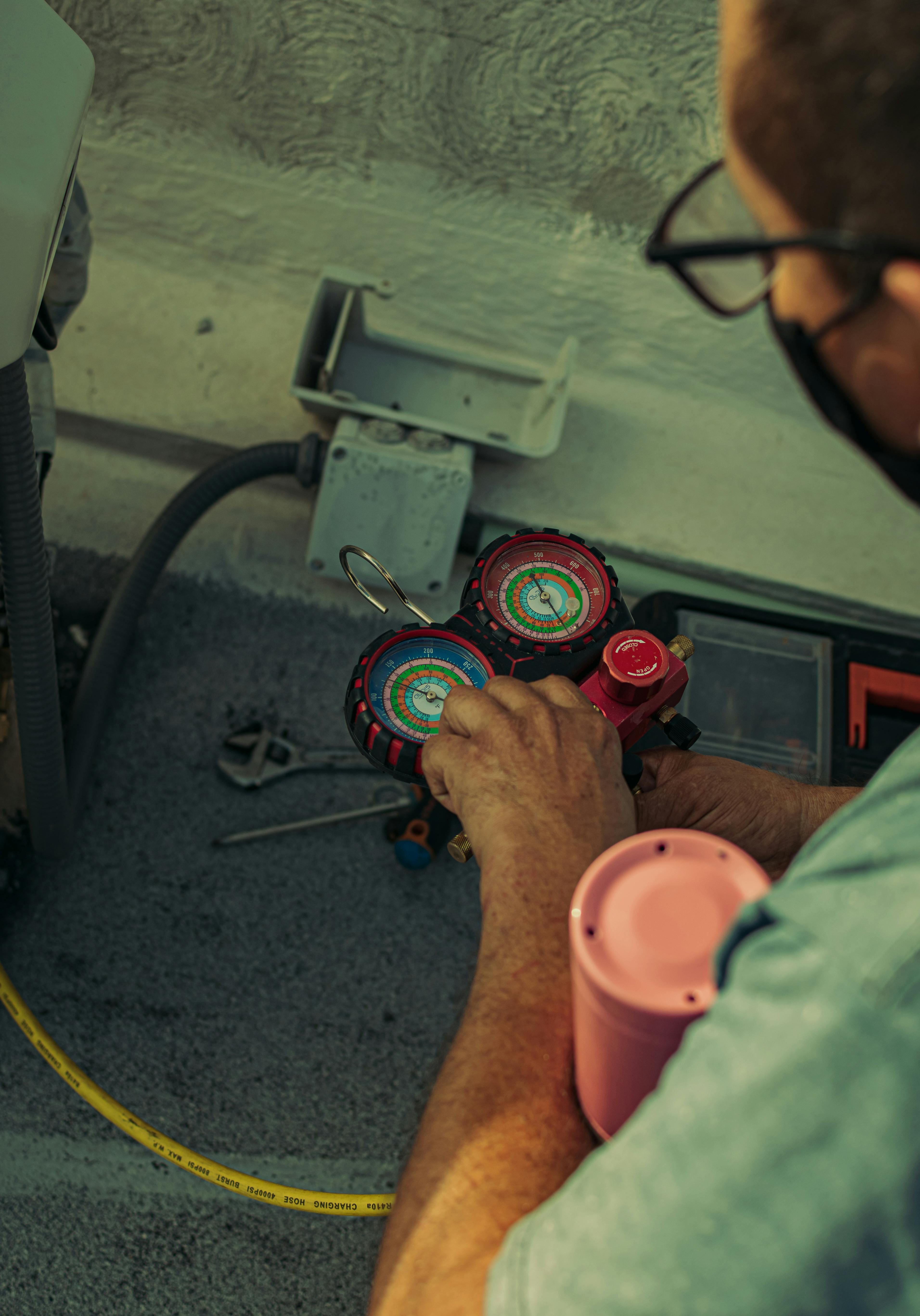
Wellman Heating & Air provides ac repair for homeowners in Grand Junction and surrounding Mesa County communities. Every call is built around fast diagnostics and durable cooling repairs for homes that cannot wait through western Colorado heat, clear communication, and practical recommendations that match the condition of the equipment and the goals of the household.
Why Choose Us?
40+ Years Experience
Licensed & Insured
Residential Specialists
Honest, Fair Pricing
Fast Response
We understand that HVAC issues can't wait. We offer prompt scheduling and clear communication throughout the entire process.
Fast Answers for AC Repair
Common homeowner trigger
warm air from supply vents
This symptom is usually tied to deeper performance factors that should be diagnosed before additional runtime causes bigger failures.
We perform a thorough inspection of your current system and home requirements.
2
Honest Recommendation
We provide clear options, whether it's a simple repair or a full system changeout.
3
Expert Execution
Our 2-man expert crew handles the installation or repair with precision and care.
4
Quality Check
We test every component to ensure peak performance and your complete satisfaction.
AC Repair in Grand Junction and Mesa County
Homeowners searching for ac repair in Grand Junction typically need answers quickly, but they also need a solution that will hold up over time. Systems across this region operate in demanding seasonal conditions, and homes vary widely in age, layout, insulation quality, and existing mechanical design.
The Wellman Approach
Durable results come from diagnostic depth, not guesswork.
The team regularly serves neighborhoods and nearby communities including Grand Junction, Fruitvale, Clifton, Palisade, Redlands, Fruita, Glade Park, Loma. Across those service areas, the most consistent homeowner priorities include restoring airflow and temperature control, resolving warm-air and short-cycling issues, protecting compressor life with accurate troubleshooting. Whether the project is urgent or planned, the objective stays the same: deliver comfort that feels stable throughout the home, reduce unnecessary operating strain, and leave homeowners with clear expectations for ongoing reliability.
Clear Explanations
Know exactly what failed and why it failed.
Options & Outcomes
Understand the outcome to expect from each option.
Long-Term Value
Discuss short-term fixes versus long-term operating costs.
Customers requesting ac repair also want transparency around value. Service should explain what failed, why it failed, and what outcome to expect from each option. That includes discussing short-term fixes, long-term operating cost impact, and where preventive work can reduce future downtime. This practical decision framework helps families choose the right path based on budget, timeline, and confidence in the system's condition.
When Homeowners Schedule AC Repair
Most calls begin with symptoms that interrupt daily comfort or signal declining equipment performance. In Grand Junction homes, common triggers include warm air from supply vents, outdoor unit not starting, high indoor humidity, frozen evaporator coils, repeated breaker trips. While some issues appear minor at first, they often indicate deeper airflow, electrical, control, or combustion concerns that can worsen with continued operation. Early evaluation protects both comfort and budget by preventing secondary damage.
Homeowners also raise concerns about unexpected summer breakdowns, repair versus replace decisions on older systems, rising utility bills caused by inefficient runtime. These are valid concerns, especially when equipment has already needed repeated service or when utility costs keep climbing.
Strategic Planning
A strong service process should separate immediate repair needs from strategic planning decisions.
For many families, decision timing matters just as much as technical scope. Planning ahead during milder weather can create better scheduling flexibility and more time to compare options. Emergency calls still receive fast attention, but proactive service usually delivers stronger long-term outcomes because installation and follow-up checks can be completed without peak-season pressure.
Technical Focus for Better Long-Term Results
Successful ac repair depends on technical details that are easy to overlook when service is rushed. Core evaluation points include refrigerant circuit health, capacitor and contactor reliability, blower performance and static pressure, thermostat communication and control calibration. Confirming these fundamentals protects reliability and helps ensure the final solution actually resolves the customer complaint rather than masking it temporarily.
System Mindset
Repair requires understanding system interaction, not just the failed part.
Homeowners also benefit from clear documentation of findings and next-step priorities. Understanding what was corrected, what should be monitored, and what could require future planning makes it easier to manage comfort costs over time. This communication-first approach is especially valuable for families balancing immediate comfort with long-term home ownership budgets.
Maintenance Strategy After AC Repair
Preventive maintenance remains essential after any major HVAC or water-heating service. For households in Grand Junction and surrounding Mesa County communities, the highest-value maintenance priorities include pre-summer condenser cleaning, electrical connection testing, air filter and airflow discipline, drain line and condensate safety checks. Keeping these checkpoints on schedule helps preserve efficiency, protects key components, and lowers the risk of surprise failures during seasonal peaks.
Maintenance also supports indoor comfort quality beyond basic temperature control. Healthy airflow, clean components, and calibrated controls help systems run quieter and more consistently from room to room. Over time, that operating stability can reduce utility waste and improve confidence that the equipment will perform when weather demand increases.
The best maintenance plans stay practical. Rather than adding unnecessary upsells, service should focus on measurable reliability gains and the specific stress points of the home. That is why Wellman Heating & Air aligns maintenance scope with system age, usage patterns, and local climate realities across western Colorado.
AC Repair Planning and Budget Priorities
Homeowners in Grand Junction and nearby Mesa County communities often want a clearer framework before approving major HVAC or water-heating work. The most useful planning model starts with outcome goals first, then aligns scope and budget. For example, one household may care most about immediate comfort restoration before a family event, while another may prioritize long-term operating cost reduction and minimal callback risk over the next ten years. Clarifying those priorities at the start of service helps avoid decisions that feel rushed or overly reactive.
Full System Context
Budget planning should account for the full system context, not only the single failed component.
Repair-First Scenarios
Repair is often the right path when the issue is isolated, core equipment condition is healthy, and performance consistency has been stable through recent seasons.
Recent service history is limited and predictable
No major airflow or control mismatch is present
Comfort performance was strong before the current fault
Replacement-Driven Scenarios
Replacement or installation planning makes more sense when reliability trendlines decline and repair spending repeats without restoring predictable comfort.
Multiple failures are concentrated within recent seasons
Energy usage increases with no comfort improvement
How to Evaluate AC Repair Contractors in Grand Junction
Choosing the right contractor for ac repair is as important as choosing the right equipment or repair scope. A strong contractor should explain diagnostic findings in plain language, provide transparent pricing structure, and clearly separate required work from optional enhancements.
Understand which changes are necessary for safety and reliability.
Know which upgrades improve comfort performance.
See how each option affects long-term ownership cost.
It is also important to verify whether recommendations include system-level checks such as airflow review, control calibration, and startup validation after repair or installation. These details are often where long-term performance is won or lost. Service that skips commissioning and follow-up verification can leave homeowners with unresolved comfort problems even after significant spending. Reliable HVAC outcomes are usually the result of complete process discipline, not one specific brand or part number.
For practical homeowner value, this page is designed to answer the most common questions tied to ac repair in Grand Junction, Mesa County, and nearby communities. Families researching providers typically compare response speed, communication quality, pricing transparency, and callback history. Wellman Heating & Air is structured around those expectations with a residential-only focus, practical recommendations, and service plans that match home conditions in western Colorado rather than generic one-size-fits-all sales scripts.
Post-Service Documentation
A final best practice is documenting what happens after the initial service visit. Good contractors provide clear next steps, recommended maintenance intervals, and early warning signs that should trigger future inspection.
This post-service clarity helps households manage comfort systems proactively and avoid emergency decision pressure during extreme weather. Whether the current need is urgent repair, planned replacement, or installation on a remodel timeline, a communication-first approach keeps homeowners in control of cost, comfort, and reliability.
AC Repair Planning by Home Scenario
The same service can look very different depending on house layout, insulation quality, occupancy pattern, and equipment age. This section breaks planning into common western Colorado home scenarios so homeowners can quickly compare what usually matters most for comfort reliability and long-term operating value. The goal is not to force one recommendation path, but to show where diagnostic attention and project scope usually produce the best results.
Established Homes With Legacy Ductwork
Older homes often carry hidden airflow losses and control drift that can make new repairs feel temporary if not addressed at the same time. In this scenario, planning should prioritize return-air health, filter strategy, duct leakage checks, and stable thermostat communication before finalizing equipment-level decisions.
When these basics are corrected first, homeowners usually see stronger comfort consistency and lower repeat-call risk after ac repair is completed.
Growing Families and Higher Daily Runtime
Homes with increased occupancy or evolving schedules often experience longer runtime windows and sharper peak-demand pressure. For these households, planning should include realistic capacity expectations, room-level comfort targets, and a maintenance cadence that supports higher utilization without waiting for emergency symptoms.
Scope decisions in this scenario should balance immediate restoration with staged upgrades that protect long-term reliability and household budget control.
Recent Remodels or Layout Changes
Additions, converted rooms, and partial remodels frequently change airflow demand without full mechanical updates. That mismatch can create hot or cold zones even when core equipment appears functional. Diagnostics should confirm distribution performance and control logic before deciding whether repair alone is sufficient.
With a system-level review, ac repair can be planned to match the current home footprint rather than the original layout assumptions.
AC Repair Scope Sequencing That Reduces Repeat Calls
Phase 1: Stabilize Immediate Comfort
First-stage scope handles active failure points so the home regains safe and usable comfort quickly. This includes fault isolation, required component corrections, and essential safety checks tied to the immediate complaint. Fast restoration matters, but it should never skip verification that the current fix actually resolved the original symptom.
Homeowners should receive clear confirmation of what was corrected and what additional observations were identified during the visit.
Phase 2: Lock in Reliability and Efficiency
Second-stage scope addresses contributors that often cause the same issue to return, such as airflow restrictions, control mismatch, or deferred wear-part replacement. Treating these factors as part of a planned sequence keeps long-term costs lower than repeated emergency visits and protects the value of completed repair or replacement work.
For many households, this phased model creates better decision confidence because priorities are transparent, measurable, and tied to real performance outcomes.
AC Repair FAQ Addendum
These foldable answers cover practical planning, execution, and maintenance considerations for ac repair work across Grand Junction and nearby communities.
How quickly should AC repair be scheduled after warm air starts?+
As soon as possible. Running a struggling AC system can increase component damage and lead to costlier repairs. Prompt diagnosis usually preserves more options and restores comfort faster.
Is recurring AC repair a sign that replacement is needed?+
Recurring failures often indicate larger system decline, but replacement is not always immediate. Equipment age, repair history, efficiency, and overall condition should be reviewed before making a final decision.
Can poor airflow feel like an AC equipment failure?+
Yes. Restricted return airflow, dirty filters, and duct issues can mimic major equipment faults. A complete diagnostic should always include airflow testing, not only refrigerant checks.
Does AC repair improve indoor air quality?+
Repairs can improve circulation and humidity control when airflow and drainage are corrected. Air quality gains are strongest when repair work is paired with filter strategy and maintenance.
How should homeowners in Grand Junction and Fruitvale prepare before a ac repair visit?+
Clear access to thermostat areas, indoor equipment, outdoor components, and water-heating spaces helps diagnostics move faster and keeps recommendations focused on root-cause performance factors.
What separates a short-term fix from long-term ac repair value?+
Long-term value usually comes from full-system diagnostics, transparent scope prioritization, and post-service verification. That means correcting the immediate fault while also checking airflow, controls, safety, and operating stability.
Helpful Articles for AC Repair
Cooling
How to Keep Your AC Running Through a Grand Junction Heat Wave
Late-July heat pushes cooling systems to their limit. Use these steps to prevent a mid-summer breakdown and keep your home comfortable.